
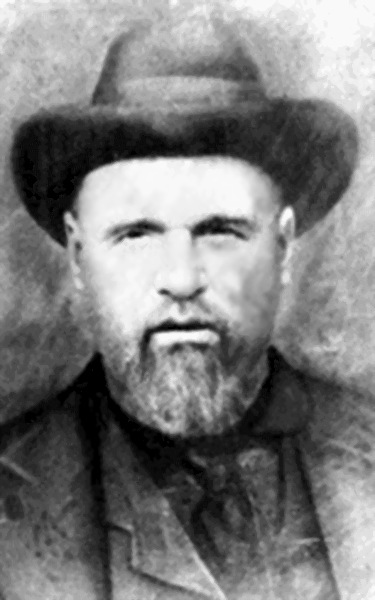
Nick Wilson (1842–1915,) lived an exciting, adventurous, life. Raised in Utah on the western frontier, this Mormon boy ran away from his home to live with the Shoshone Indians. Known as “Yagaiki” among the Shoshones, Wilson became the ‘adopted brother’ of noted Shoshone leader, Chief Washakie. He became widely known as the White Indian Boy. Always friendly towards the Native people, he always championed their causes, and spoke out against atrocities committed against them.
Besides being a childhood runaway, during his colorful lifetime, Wilson was a Mormon American pioneer, Pony Express rider for the Central Overland California and Pikes Peak Express Company and a stagecoach driver for Ben Holloday’s Overland Stage. He became a blacksmith, a prison guard, a farmer, a carpenter/cabinet maker, a fiddler, a trader, a trapper, and a “frontier doctor,” who treated diphtheria and smallpox. In later years he became a Mormon bishop and practicing polygamist and was imprisoned for unlawful cohabitation with his second wife. While in prison he built furniture for the warden’s office.
While traveling with the Shoshones, he lived in Bloomington in the Bear Lake Valley. For a time after leaving the Indians, Wilson settled near Soda Springs, Idaho, where he became a Mormon bishop. He later founded a town in Wyoming, which was named Wilson, after him.
In his later years Wilson entertained young children with tales of his adventures and exploits, and was known as “Uncle Nick.” His 1910 autobiography, Among the Shoshones, quickly became a western classic. Its readers were fascinated by Nick Wilson’s frontier exploits. The volume was so popular that Wilson’s son Charles wrote a second book, The Return of the White Indian, relating adventures from Nick Wilson’s later life. Its narrative begins where the first memoir ends, in 1895. These books have enjoyed popularity for more than a century. Nick Wilson’s life was highlighted in the 2000 movie Wind River.
These books…are testaments to a unique time and place in American history. Because Wilson had a heart for adventure and unusual proficiency with Native American languages, his life became an historical canvas on which was painted both the exploration and the closing of a frontier, as he went from childhood among the Shoshone to work as an interpreter for the U.S. government on Indian reservations in Wyoming and Idaho in his later years.
Sources: Tidbits: Odd and Obscure Amazing- Amusing Facts, Stories, Statistics of Bear Lake Valley History by J. Patrick Wilde, published by Watkins Printing, copyright 1997; The White Indian Boy, University of Utah Press, J. Willard Marriott Library, copyright 1985; Wikipedia 2021
Leave a Reply
You must be logged in to post a comment.