
- Established: Built in 1873 to replace the section facilities formerly at Ten-Mile; there was both a Seco Townsite and a Seco siding, a mile and a half west of the townsite
- Miles from San Francisco: 743.0
- Used by Railroad: 1873- 1901
- Railroad Function: Established in June 1873 as a section station, to accommodate moving facilities from Ten-Mile, which is 3.6 miles east; work crews and inhabitants were primarily Chinese- over 10,000 of whom worked on the Central Pacific from sunrise to sunset, 6 days/week for little more than a dollar a day; the historic signpost at Seco tells the story of the monumental contributions of the Chinese railroad workers, as well as telling of the ravages created by treasure-seekers and vandals; a well, remnants of the tiny Chinese dugouts and foundations still exist
- Local Lore: Not far from Seco, an unusual robbery was said to have occurred, when stolen gold was said to have been stashed behind the iron doors of a stolen bank vault high in the mountains; some accounts place the location of the stash not far from Seco and the low desert hills of Hansel Valley, others in the Samaria Mountain Range, south of Malad; many important details of the tale are missing, but all accounts tell of the robbers stashing their take inside a cave, behind an iron door, supposedly taken from a bank robbery in Corinne; when the gang traveled to Malad, a gunfight broke out, with most of the gang dead, the remaining outlaw died while trying to tell where the gold was hidden; the legend of the Iron Door Mine has fascinated fortune hunters for decades, but no one has ever claimed the loot’s recovery
- National Parks Signpost: Gives a brief account of the role of Chinese workers in constructing the railroad for a little more than a dollar a day in wages; there were estimated to be over 10.000 workers on the railroad, many of whom were Chinese, who were forced to work for fewer wages, had to provide and cook their own meals, unlike other workers, lived in isolation in their own sections, and never numbered in the population of the areas they lived in; the signpost also stresses the dangers and damages done by vandalizing historic sites
- Location: Located seven miles east of Kelton, between Nella and Elinor, three and a half miles east of Ten-Mile
- No Population estimates for this isolated northern Utah rail siding; though the population during peak years was estimated at about 25
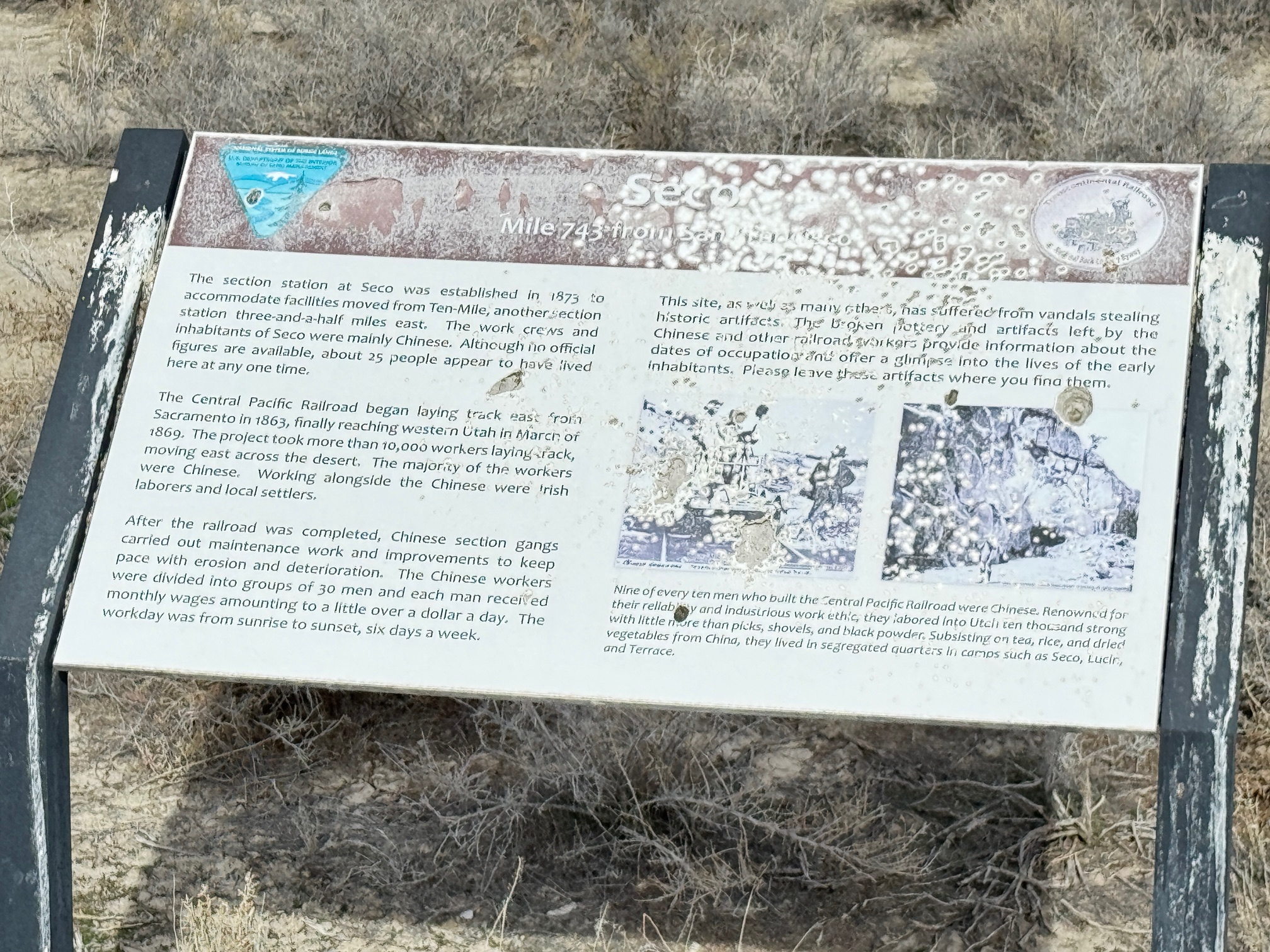
CP-16 Seco Construction Camp
Last Mortified: