
- Established: 1869, as a temporary construction camp on the Central Pacific Rail Road
- Miles from San Francisco: 751.6
- Origin of Name: Originally named Cosmos, after the Greek word for ‘order and ‘harmony,’ it was renamed by error after the railroad’s surveyor, Jacob Kosmo
- Railroad Function: Two separate railroad sidings existed at Kosmo: West Kosmo, used by the railroad 1912- 1942?; built in conjunction with potash activity, and East Kosmo, used by the railroad October 1901- April 4, 1906; housed 3 bunkhouses, a cookhouse, garage, stock corral, general store, blacksmith shop, coal house and a car body that served as its depot; utilized by several area ranchers; the two sidings were located one-half mile apart
- Historic Overview: Also spelled “Kosmos” or “Cosmo,” Kosmo the site of a wild brawl between the Central Pacific’s Chinese workers and the Union Pacific’s Irish work force; set off when the Irish workers lit a keg of gunpowder under the Chinese’ camp, the resulting brawl left many dead and wounded; was settled in two separate sections, first in 1901 and again in 1912; East Kosmo, established in 1901, was built as a railroad spur, serving area ranchers, but was abandoned by 1906; West Kosmo, built in 1912, was established as a spur for potash mining; located about a half-mile from East Kosmo and created by the Salt Lake Potash Company during World War I to combat potash shortages, an important ingredient in manufacturing gunpowder; at that time, potash was virtually monopolized by Germany, an enemy of the US during the war; the Salt Lake Potash Company built canals, ponds, a rail siding and processing station at West Kosmo (often referred to as Kosmo after East Kosmo siding was abandoned) to produce the product, crucial to the war effort; the population of West Kosmo reached 200 people by 1925; today, only a few concrete foundations remain
- Location: Located between Monument and Lake Construction Camps on the Central Pacific route, south of the Great Salt Lake; East Kosmo was 3.5 miles west of West Lake; West Kosmo was another half mile west
- No Population estimates for this isolated northern Utah ghost town; at least 200 people lived there in 1924
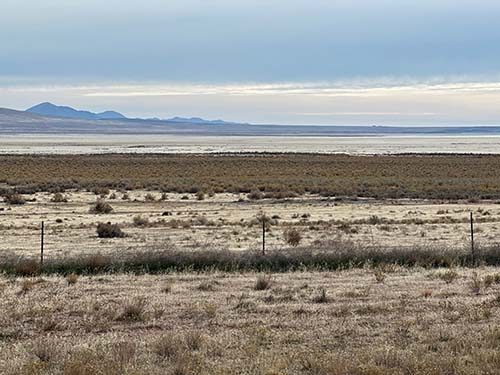
CP-19 Kosmo Construction Camp
Last Mortified: