
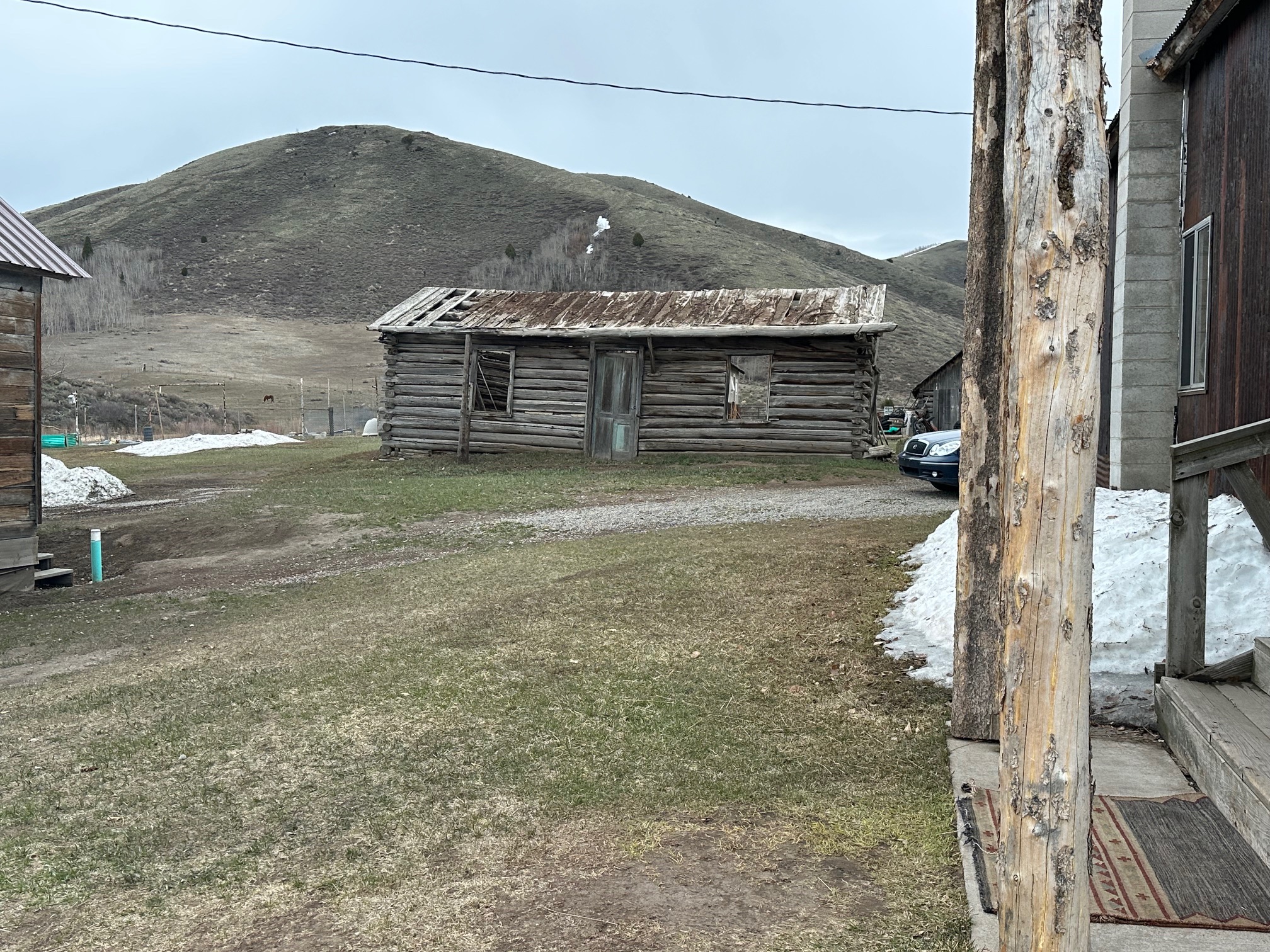
Henry, Idaho was founded around 1884 by Dutchman John Henry Schmidt, who constructed a three-room log cabin and a one-room store when he moved to the area. Wm H. Chester, his son, Will and Frank Merrill bought the building and property, which had become known as The Henry Store, from Mr. Schmidt in 1891.
A larger frame building was built on the present store site in 1892, but was destroyed by fire in 1906. Wm H. Chester and his sons Walter James and Colin Chester, constructed the present building in 1908, operating the store as a partnership for some forty years. Jim Chester purchased Colin’s interest in the business in 1928, operating the store until his death in 1974.Tom Chester inherited the store, which at one time was believed to be the longest- running store in Idaho, operated by the same family.
Jim and Colin Chester added a saloon, a blacksmith shop and a restaurant to serve their clientele. Henry became known as a center for the ranchers and farmers in the area, where many cattle and sheep operations flourished. It has been said that at one time Henry had two general stores, two saloons, and many other thriving businesses. The Henry Store contains relics from the past, including an ancient barber chair, rumored to be the oldest in the state, a card table and its original post office front.
A one-room school house, teaching grades 1-8 was constructed on the north end of town, with many children arriving on horseback or in sleighs. Winters were severe, allowing travel during the winter months only by team and sleigh. Care were jacked up on blocks, unused from November to May. Mail was delivered five days a week by team and sleigh, with one bob, covered with canvas, heated by a small coal stove. Al Deatoon, of Soda Springs held the mail contract for many years, driving his mail teams from Soda to Henry, meeting the other mail team from Grays Lake, then returning to Soda, daily. For many years, fresh teams were housed and fed in Henry, by Jim Chester.
Sheep operations flourished in the Henry area. For many years flocks of sheep from all over southern Idaho summered in the country around Henry and Wayan. About a mile south of Henry, a large sheep-shearing corral was constructed by George Allbricht. Each spring large flocks of sheep were driven to the corral, where their fleeces were shorn, then tromped and compacted into gigantic burlap bags, about 8 feet long and 3 feet in diameter. Workers inside the bags, tromped each pelt after it had been sheered and thrown inside. The work was exhausting, often in sweltering heat in very close quarters. When full of wool, the bags typically weighed four hundred pounds each.
Henry boasted one of the first great rodeos in the West, known as “Henry Stampede and Stockmen’s Reunion.” The rodeo grounds were located one and a half miles west of Henry, on the banks of Blackfoot Reservoir. A popular attraction at the rodeo was an exhibition of precision sharp shooting, presented by Mr. Gus Perot who traveled the West for Peters Ammunition. One example of his shooting expertise involved shooting outlines of Buffalo Bill Cody’s head and one of an Indian chief. Using three lever-action .22 rifles, two were being loaded by assistants as Perot fired the remaining rifle in a very short amount of time.
Gold was discovered around the Caribou Mountains in 1870, by a tall-tales telling miner called “Cariboo Jack” (his real name was Jesse Fairchild) and two fellow miners. During the resultant goldrush, which lasted twenty years, the surrounding countryside boomed. It is said that over fifty million dollars of gold was harvested in the area. But, sadly, when the ore veins ran out, many boomtowns were abandoned, with little left of their earlier prosperity. However, “Cariboo Jack” had long-term impact on the area, since Caribou National Forest and Caribou county were derived from his name, rather than a member of the deer family that never lived there.
From 1907-09 a dam was planned to be constructed by the Bureau of Indian Affairs on the Blackfoot River. Completed in 1911, the dam impeded the water flow to provide irrigation water for farmers and generate electricity. Located eighteen miles west of Henry, of rock and earth, the rising water from the dam forced many residences to relocate from the rising waters of Blackfoot Reservoir.
Blackfoot Reservoir has become an outdoor enthusiast haven. Countless species of migratory waterfowl nest along the shores of its waters. Many species of ducks, geese and other gamebirds abound. Egrets, herons and pelicans populate the area in large numbers. The Reservoir has a very good population of rainbow and cutthroat trout, up to about five pounds. Come, spend a day, a week, or a few hours in this wonderful area. You’ll be glad you did.
Compiled from various documents, written by Sharon Porter for Cedar Bay Marina, RV Park and Cafe
Leave a Reply
You must be logged in to post a comment.