
According to reports, Agrippa Cooper was the first white settler in Richmond, arriving in the mid-1850s. In 1859, surveyors visiting the Richmond determined it to be a suitable area for habitation. Since the area is blessed with an abundant water supply that could be used for farming and milling, in its fertile soil grow many abundant farm crops.
Within a few years dugouts and log cabins were built in the area, and in 1860, a sawmill and a schoolhouse were erected. Since most of Richmond’s early settlers were Mormon pioneers, in 1860, LDS Church President Brigham Young visited Richmond to council settlers and direct the emerging settlement.
Since the Native Americans were becoming hostile to many of the Mormon pioneers in Cache Valley, and many violent battles had already been fought, Young counseled the settlers to “Move your families and wagons close together. Then, if you are disturbed, you are like a hive of bees, and everyone is ready and knows at once what to do. A fort named “Fort Richmond” was built as a defense shortly after Young’s visit.
Incorporated in 1868, the city was likely named in honor of LDS apostle Charles C. Rich, though it may also have been named for its rich local soil or after Richmond, London, the hometown of some of its English settlers.
Holstein Friesian cattle were brought to Richmond in 1904, and the local dairy industry thrived. Richmond quickly became well known as Utah’s Holstein center, and in 1912, the “Richmond Holstein Cow Show” was founded. Eventually the event became known as “Black and White Days,” the community’s biggest celebration”. This yearly celebration in mid-May is promoted as the largest continually running dairy cattle show west of the Mississippi River. The show features carnival rides, food vendors, horse pulls, a parade and so much more.
In 1902, Richmond’s first two creameries—Cache Valley Dairy and Union Creamery—each produced up to 40,000 lbs. (18,000 kg) of milk per day. The creameries were absorbed by Utah Condensed Milk Company in 1904, and then reorganized as Sego Milk Products in 1920. For many years, the plant was the largest operation of its kind in the western U.S., but the milk plants have been closed for many years and abandoned.
In 1912, after an election, a Carnegie library was established in Richmond. In 1914, the Rich-mond Carnegie Library was completed on Main Street, and is one of the few remaining Carnegie Libraries in Utah.
At 6:35 am, local time on August 30,1962 the largest recorded earthquake in the state of Utah at that time, hit northern Utah. With a magnitude Mw5.9, the Cache Valley quake’s epicenter was located just north of Richmond. Property damages were estimated between $1 and $2 million dollars ($8.5 to $17 million in 2020.) It was, at that time, the most-costly quake in the history of Utah. Most of its damage was in Richmond, but the nearby Utah towns of Logan, Franklin, Lewiston, and Preston, Idaho also reported some damages.
The building with the most significant damage was the LDS Benson Stake Tabernacle in Richmond. The structure was eventually torn down due to its extensive structural issues caused by the quake, along with several older houses. There was significant damage to North Cache High School, headstones in the cemetery were knocked over, and many houses’ chimneys and masonry collapsed or were badly cracked, along with broken windows, and cracked walls. The high school had to be temporarily closed for repairs.
No people were killed in the quake, but one person was cut on her foot by a broken bottle.
Source: Wikipedia search, “Cache Valley earthquake- 1962”
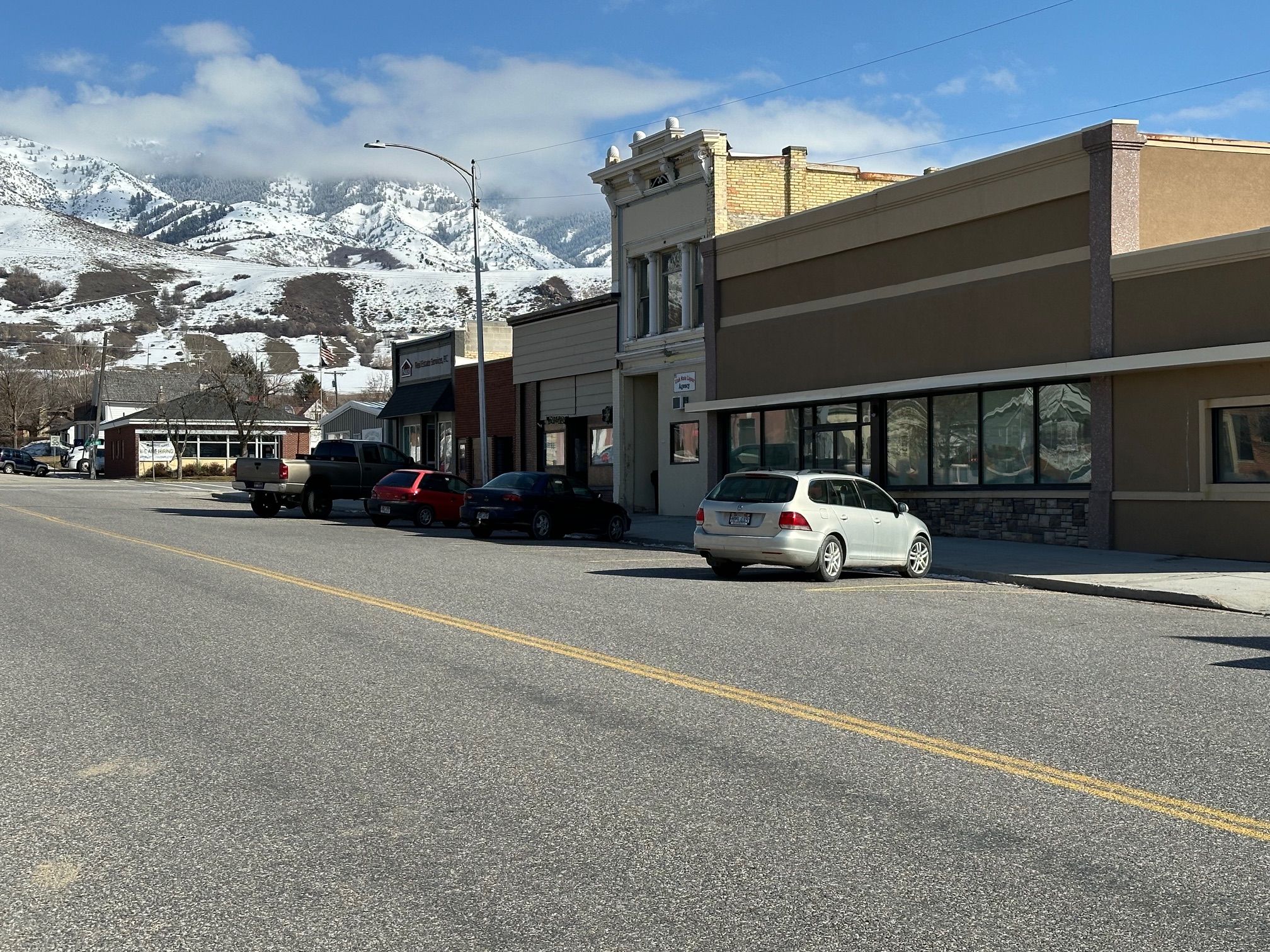
Our Town’s Story: Richmond, UT
Last Mortified:
Leave a Reply
You must be logged in to post a comment.